
Specialties
Online insomnia treatment
Get back to restful nights with a plan that looks at the whole picture: your sleep habits, your stress and your mental health.
How can therapy and medication help with insomnia?
Insomnia means regularly having trouble falling asleep, staying asleep or waking too early, and feeling the effects during the day. It often goes hand in hand with anxiety, depression, stress or changes in routine.
We look at what is keeping you awake, including mental health, habits and medications, and treat the cause, not just the symptom. Sleep-focused therapy techniques are the first choice for long-term insomnia, with medication used carefully when it helps.
- Medication management. When medication is helpful, we choose carefully, use the lowest dose that works and review it regularly.
- Sleep-focused therapy. Proven strategies to reset your sleep schedule, quiet a busy mind at night and break the cycle of lying awake.
- Both together. Short-term medication can give relief while therapy builds lasting habits for better sleep.
Symptoms
Common signs of insomnia
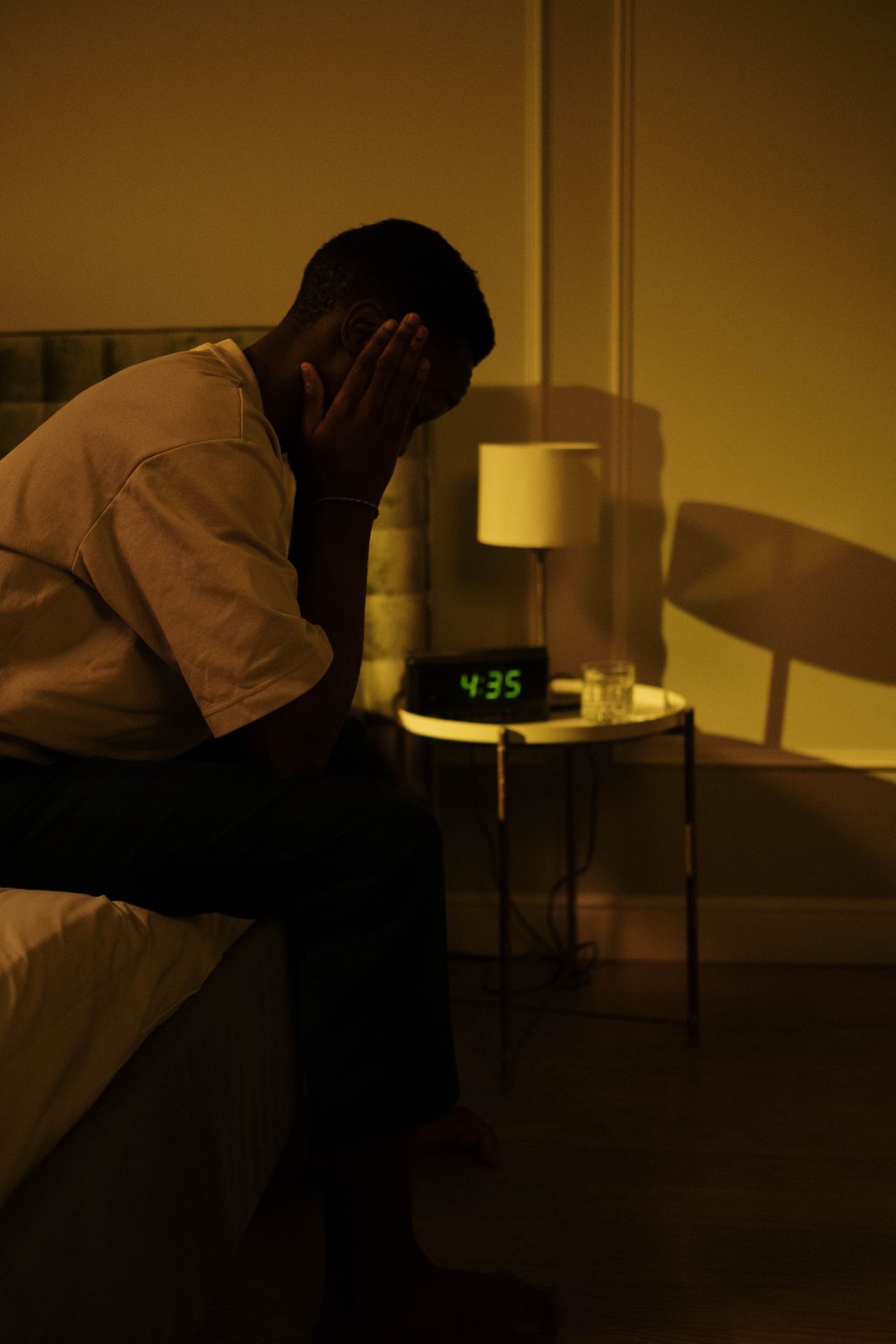
You may have insomnia if, for several nights a week, you notice:
At night
- Taking a long time to fall asleep
- Waking often or too early and not getting back to sleep
- Lying awake with a racing mind
- Dreading bedtime
During the day
- Feeling tired even after a night in bed
- Irritability or low mood
- Trouble focusing or remembering
- Relying on caffeine to get through the day
Only a qualified clinician can make a diagnosis. This page is general information, not medical advice.
Care from a board-certified psychiatric nurse practitioner
Your care is led by Abimbola Shadare, a board-certified Psychiatric Mental Health Nurse Practitioner. She can evaluate, diagnose and treat mental health conditions, prescribe medication and provide talk therapy, so your whole plan lives in one place.
Every visit is by secure video, from home or wherever you feel comfortable. We take time to listen, explain your options clearly and make decisions with you, not for you. More about Abimbola
Questions
Questions about insomnia care
Can't find your answer? Contact us or call +1 (240) 593-2260.
Do I need a sleep study?
Usually not for insomnia. If your symptoms suggest another sleep problem, such as sleep apnea, we'll recommend you see your primary care provider or a sleep specialist.
Will you prescribe sleeping pills?
Sometimes medication helps, but it is rarely the whole answer. We'll talk about options, including non-habit-forming ones, alongside sleep strategies.
Can anxiety or depression cause insomnia?
Yes, very often. Treating the underlying condition is often the key to sleeping better.
How long until I sleep better?
Many people notice changes within a few weeks of consistent sleep strategies. We'll track your progress together.